UnderSpot Special Report: Physical Silver Liquidity Stress Is Escalating

January 14, 2026 | Time of Writing:
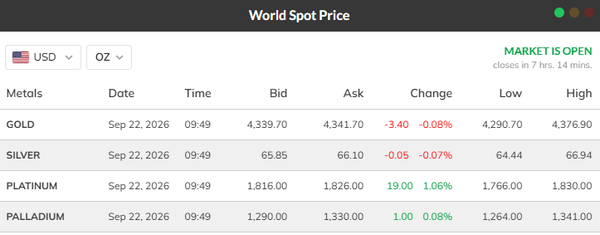
Gold: ~$4,610
Silver: ~$91.75
Market Snapshot
Spot prices remain elevated across the complex, but physical market functionality continues to deteriorate, particularly in silver.
Gold purchasing remains largely unaffected.
Silver, however, is now showing clear signs of liquidity rationing.
What Changed Today
Multiple developments occurred simultaneously that materially alter the physical silver landscape:
- A large national buyer publicly halted purchases of most silver categories
- Another major participant repriced silver bids sharply lower, moving broadly to deep discounts under spot
- A top-tier retailer instituted a $10,000 minimum on silver purchase orders
- Refiners and distributors remain weeks behind, despite ongoing claims of operational strength
Individually, these are notable.
Together, they represent system-level stress.
Observed Market Behavior
Across the physical silver chain, we are seeing:
- Selective buying limited to the most liquid sovereign products
- Punitive bid structures that discourage non-essential selling
- Operational throttling via order minimums and SKU reductions
- Extended delivery timelines becoming normalized rather than exceptional
This is not a demand problem.
It is a throughput and risk management problem.
Liquidity vs. Price
Spot silver continues to trade near recent highs, but spot is no longer an accurate proxy for physical liquidity.
Current spot prices reflect:
- Paper settlement
- Futures clearing
- Financial market participation
They do not reflect:
- Fabrication capacity
- Refining backlogs
- SKU-level availability
- Dealer balance sheet constraints
What is widening is the disconnect between price discovery and physical clearing.
Gold–Silver Divergence
Gold remains comparatively stable because:
- Fewer fabrication steps
- Higher value density
- Stronger institutional backstops
- Faster settlement cycles
Silver remains vulnerable because it is:
- Operationally intensive
- Lower margin per unit
- Highly dependent on logistics
- Sensitive to volume surges
This divergence has been building for weeks and is now structural, not temporary.
Why Buyers Are Pulling Back
The behavior we’re seeing suggests buyers are prioritizing:
- Balance sheet protection
- Inventory risk management
- Volatility insulation
- Operational survivability
Deep discounts and outright purchase halts are not expressions of bearishness.
They are risk controls.
What Historically Comes Next
In similar conditions, markets typically experience some combination of:
- Widening physical premiums despite flat or falling spot
- SKU extinction, where certain products simply disappear
- Sudden repricing events when buyers re-enter selectively
- Liquidity concentration into sovereign and ultra-recognizable products
- Temporary freezes in secondary and generic silver
We are already well into stages 3 and 4.
UnderSpot View
This is not panic.
This is not collapse.
This is the physical market quietly stopping the bleeding.
Liquidity crises rarely announce themselves with price crashes.
They announce themselves with rules, refusals, and delays.
Today, several of those lines were crossed.