A Quiet Market, A Loud Signal


A Christmas Eve Note on Liquidity, Greed, and What We’re Watching
UnderSpot — Special Holiday Commentary
The day before Christmas is rarely a meaningful trading day.
Most desks are thinly staffed.
Most sheets are stale.
Most participants are already mentally checked out.
And yet, these quiet sessions can be revealing—not because of what happens, but because of what has already been set in motion.
This note is not about price.
It is not a forecast.
And it is not a call to action.
It is simply an observation about where stress tends to surface first when markets grow complacent.
When Price Is Strong but Liquidity Feels Tight
Over the past week, UnderSpot has observed a subtle but persistent disconnect:
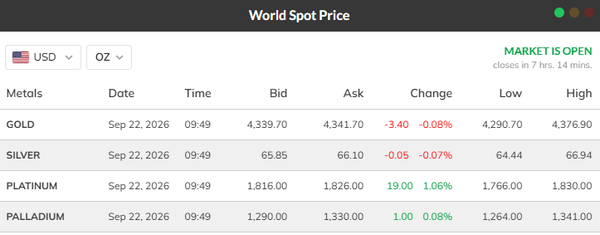
- Spot prices remain firm
- Sentiment remains broadly bullish
- Confidence in “higher for longer” narratives is widespread
At the same time:
- Premium behavior has grown uneven
- Silver remains soft despite elevated spot
- Gold demand is selective rather than broad
- Dealers appear more conscious of velocity and exposure
None of this screams panic.
None of it makes headlines.
But taken together, it suggests something worth paying attention to:
Liquidity discipline is quietly becoming more valuable than directional conviction.
Why That Matters More Than Price Right Now
Markets do not typically break where everyone is looking.
They break where assumptions go unchallenged.
In physical metals, one of the most dangerous assumptions is that liquidity will always be there when you need it—that metal can always be converted back into cash quickly, cleanly, and without friction.
When confidence is high and price continues to validate exposure, that assumption hardens into belief. And belief, at the late stages of a cycle, often turns into something else entirely:
Greed disguised as certainty.
The Difference Between Conviction and Optionality
Conviction says:
“This isn’t ending anytime soon.”
Optionality says:
“I want to be able to respond if conditions change.”
Early in a cycle, those two ideas coexist easily.
Late in a cycle, one starts to crowd out the other.
The data UnderSpot tracks does not suggest an imminent collapse. But it does suggest that many participants are becoming increasingly comfortable trading away flexibility in exchange for exposure—often without fully pricing the risk of doing so.
That trade almost always feels justified… until it doesn’t.
What We’re Actually Watching (Not Predicting)
We are not focused on calling tops or bottoms.
We are watching behavior.
Specifically:
- How quickly cash follows metal
- How counterparties manage settlement
- How premiums behave under stress
- How selective demand becomes when prices are high
These are not emotional indicators.
They are mechanical ones.
And mechanical indicators tend to matter most when sentiment is confident and markets are quiet.
A Holiday Reminder
Christmas Eve is a fitting time for this note, because periods of pause often create the illusion of stability.
Nothing feels urgent.
Nothing feels broken.
Nothing feels like it needs immediate attention.
That is usually when the most important dynamics are already forming.
This is not a warning.
It is not pessimism.
And it is certainly not fear.
It is simply a reminder that markets reward those who preserve optionality just as much as those who chase upside—and that liquidity, once taken for granted, has a habit of reasserting its value very quickly.
UnderSpot View
Price is loud.
Liquidity is quiet.
When they diverge, we listen to the quiet one.
Regular coverage will resume after the holiday.
Merry Christmas.